Summary Problem Research Build Tradeoffs Learnings
Back
Product Management · Social Commerce

Garde-Robe

Product Management Intern at a fashion tech startup, overhauling the product into an AI-powered social commerce discovery platform.
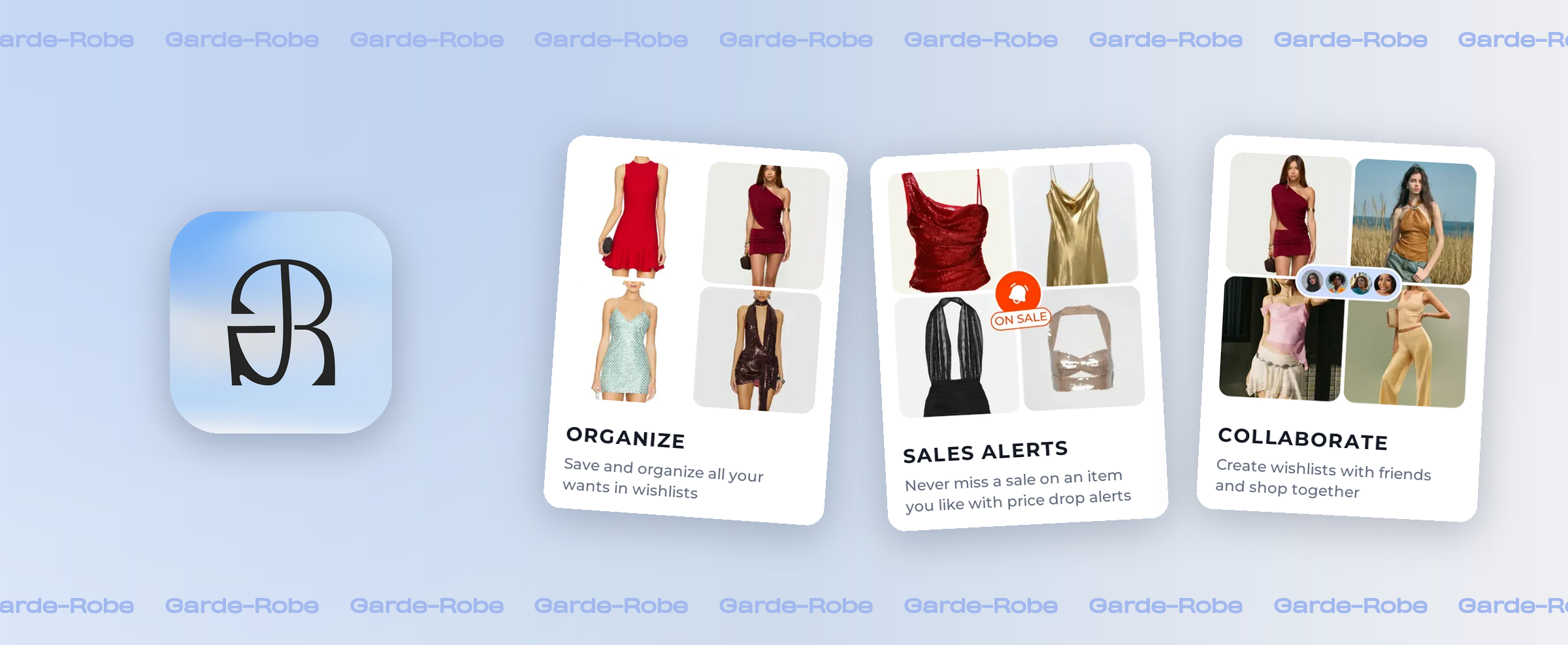
Three Garde-Robe prototype screens: closet sync onboarding, the curated discovery feed, and shared wishlists
Role Product Management Intern
Company Garde-Robe Inc.
Duration Summer 2026
Skills
AI Product Development 🔍 Product Discovery 📐 Rapid Prototyping 🧠 Personalization Systems

Screens shown are prototypes. Details have been generalized and simplified for confidentiality.

15+
user flows designed and prototyped with Claude Code across 50+ screens
50%+
fewer bug reports from user testing
5+
features going into the next version of the app
Garde-Robe
Fashion · Shopping · Social commerce

Garde-Robe is a fashion and social commerce app that builds your digital closet automatically from your shopping receipts, tracks what you want with wishlists that alert you to sales, and helps you resell what you no longer wear.

I first led a 10 week client project with Garde-Robe during the Spring 2026 semester through Product Space @ Penn, a student product management club, beta testing the app and pitching recommendations to the founder. That earned an internship offer, and I joined for the summer as their Product Management Intern, reporting directly to the CEO.

Finding its space in the category

Garde-Robe had trouble finding which space in the fashion app category it wanted to be in. Beta testers found it confusing, it read as one more manual closet catalogue, and it asked for a lot of work before returning any value.

The same complaint surfaced under several different headings. The core value was not clear on first open, some of the most useful features were undiscoverable, and others felt dated to the Gen Z audience it was built for.
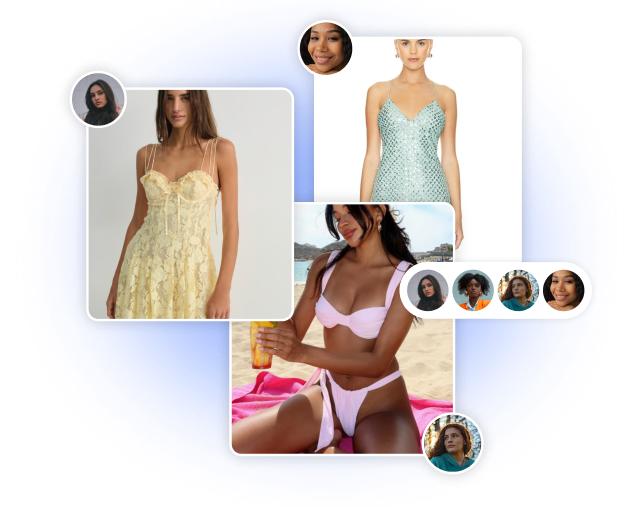
Collage of saved fashion images with user avatars, the pinboard-style layout the feed used before the overhaul

What makes an app sticky

I tore down 8+ categories of apps across 20+ competitors, from books and music to closet and resale, to study what makes apps sticky and the social mechanics that Gen-Zs want to use.

That research produced the main concept proposal I gave to the founder, which shaped the overhaul of the app into something users would want from a fashion app.
App icons for four of the products studied in the teardown

Proposal and prototypes

In my proposal process, I would put together lo-fidelity prototypes in Figma to visualize the components and features I wanted to change. It gave the founder a much better grasp of what I wanted to build.

These prototypes also acted as the starting point and reference for building workable versions in Claude Code.
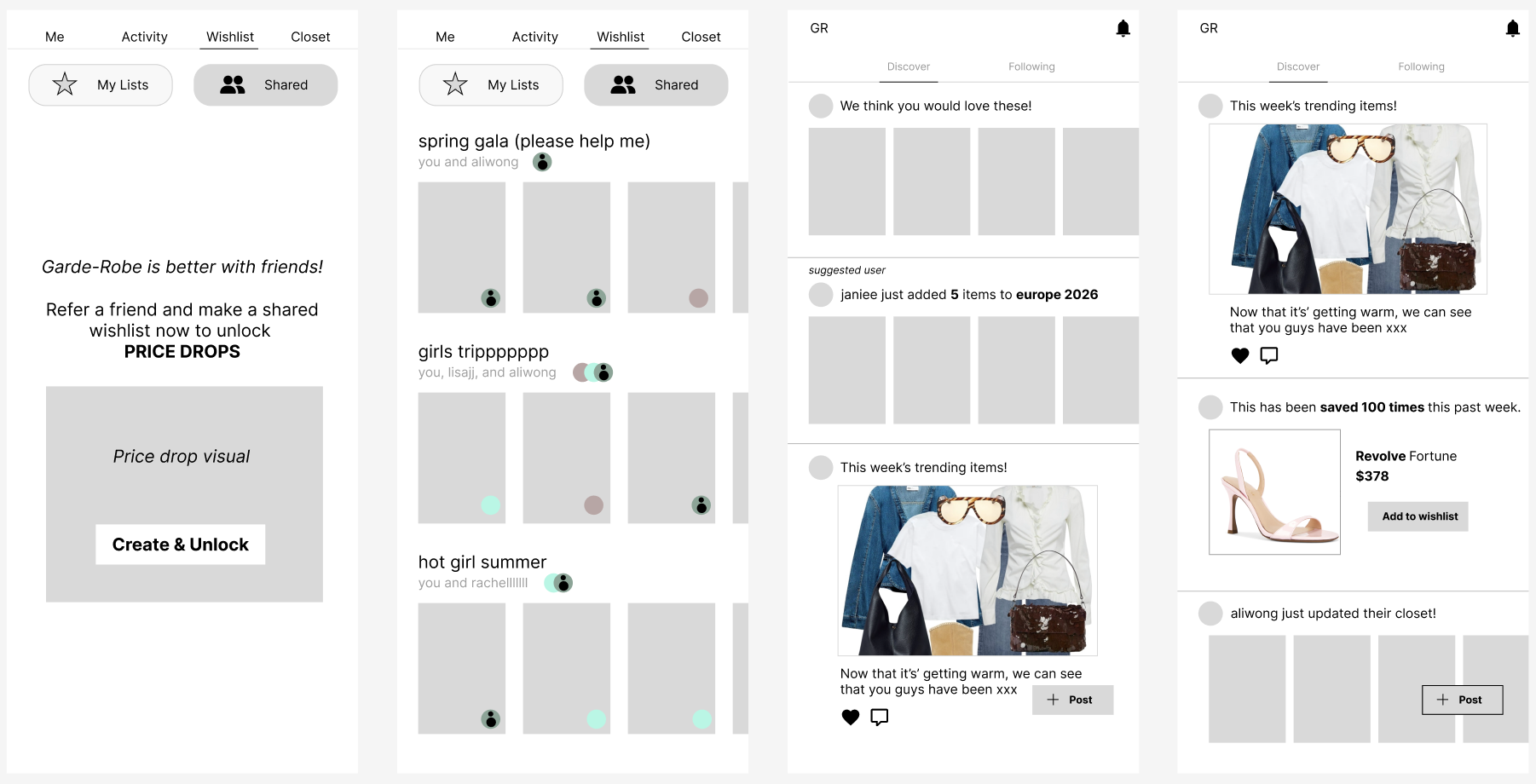
Lo-fidelity Figma wireframes of the shared wishlist and feed screens

Building the features

Throughout the summer I built 15+ clickable end-to-end user flows across 50+ screens in React and TypeScript using Claude Code, iterating on screens and adding features directly based on user and founder feedback loops. I extracted the designer's design system into reusable tokens and shared components, which let me build prototypes that matched the production UI.

It changed how the team worked. Instead of handing the designer and engineering team a document to interpret, I passed over a working starting point, which cut the interpretation work on their end down significantly.

Selected feature highlights
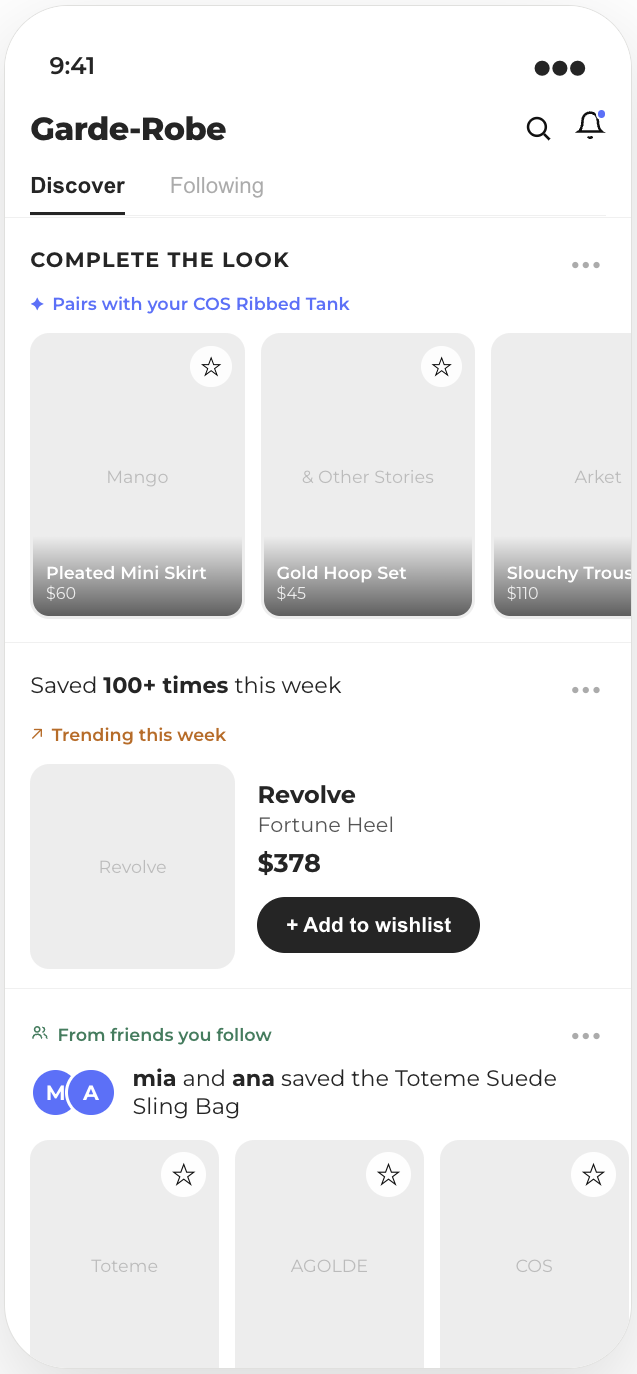
Home feed
01 Curated home feed The home feed read like a generic pinboard, a grid of saved images from every user on the platform, and testers said it felt too close to Pinterest. I took that feedback and rebuilt it as an AI-powered discovery feed that recommends people with a similar style, items matched to what a user already saves, activity from friends they follow, brands in their closet, among other in-feed recommendations.
Onboarding and closet sync
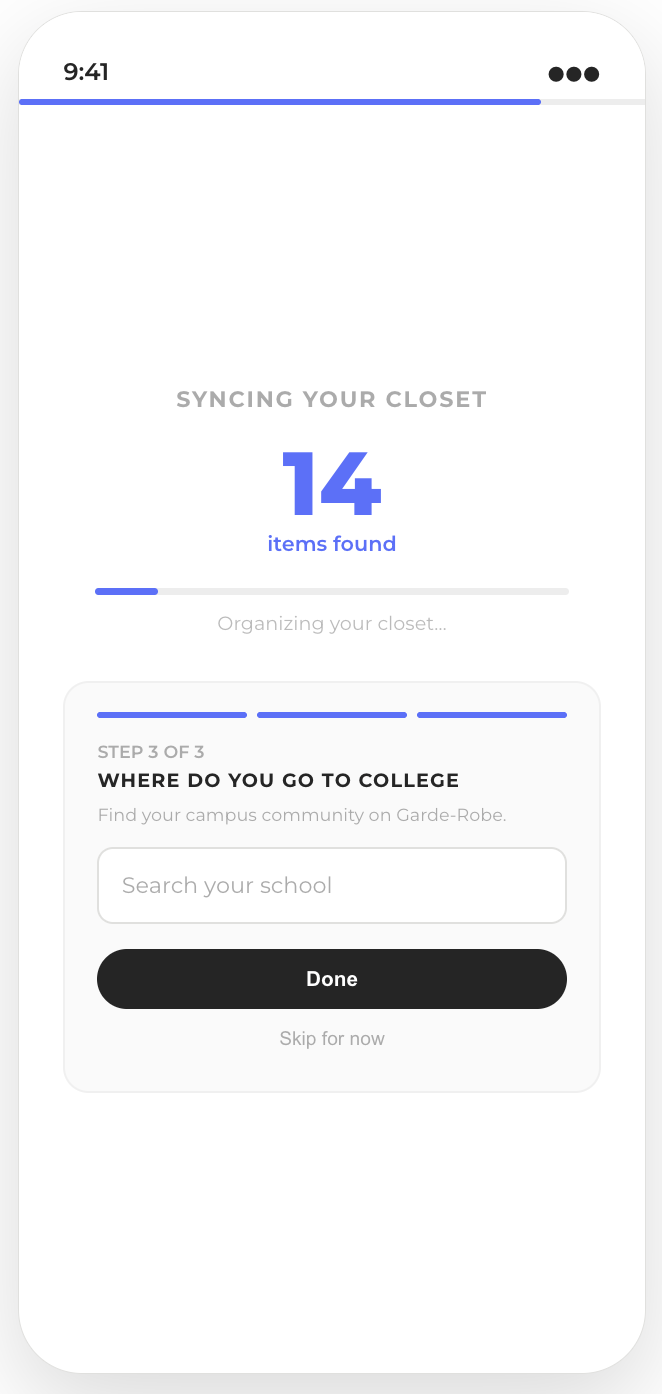
02 Onboarding and closet sync Users were not using the one-click closet sync, which parses receipts from their inbox to build a digital wardrobe for them. I proposed and rebuilt a 12+ screen onboarding flow that carries a new user from app introduction to building their digital closet. This rebuild was crucial as it doubles as the data layer for personalization. Every imported purchase becomes a signal the recommendation engine reads, so how complete a closet is directly determines how well the curated feed performs.
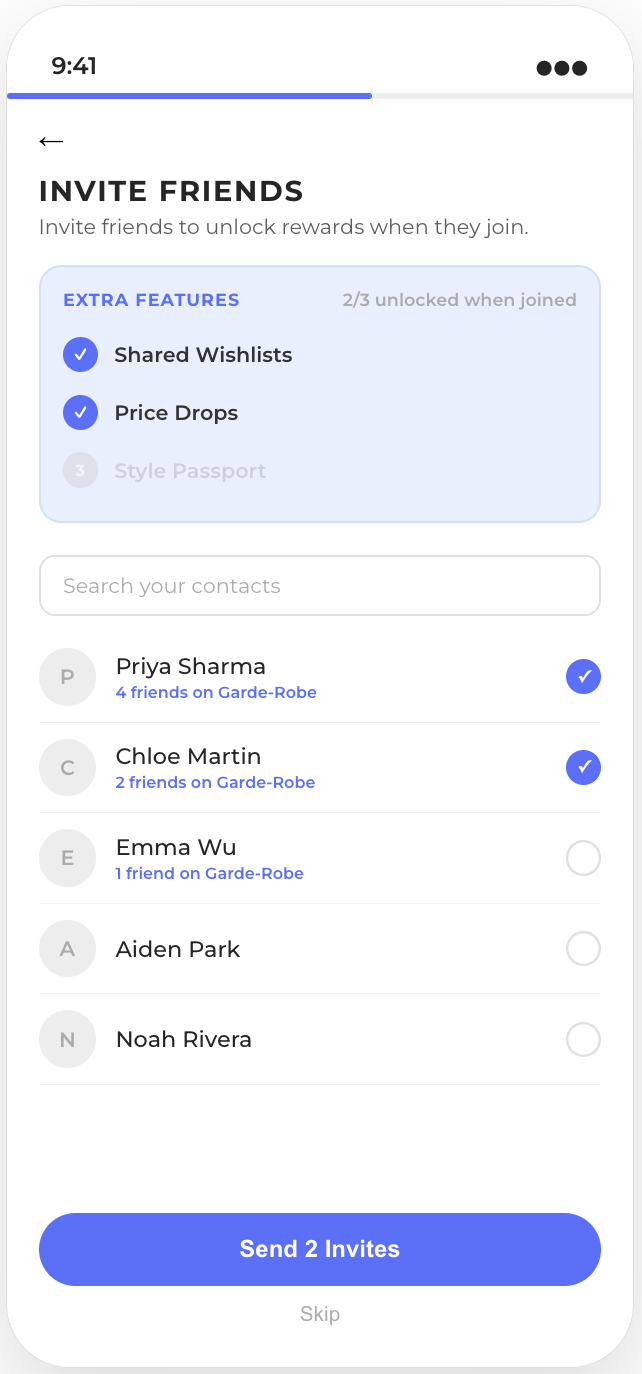
Invite friends screen with tiered referral unlocks
03 Referral mechanic During my 10 week client project with Garde-Robe, I found that the app had no natural moment to ask a user to bring a friend in. I proposed a growth lever the product could pull, bringing new users in through the people already on the platform. I built a 3-tier referral system that unlocks a different part of the app each time a friend joins. I nested the mechanic under 3 main sections across the app, including in the onboarding, so it appears at moments a user is already engaged.
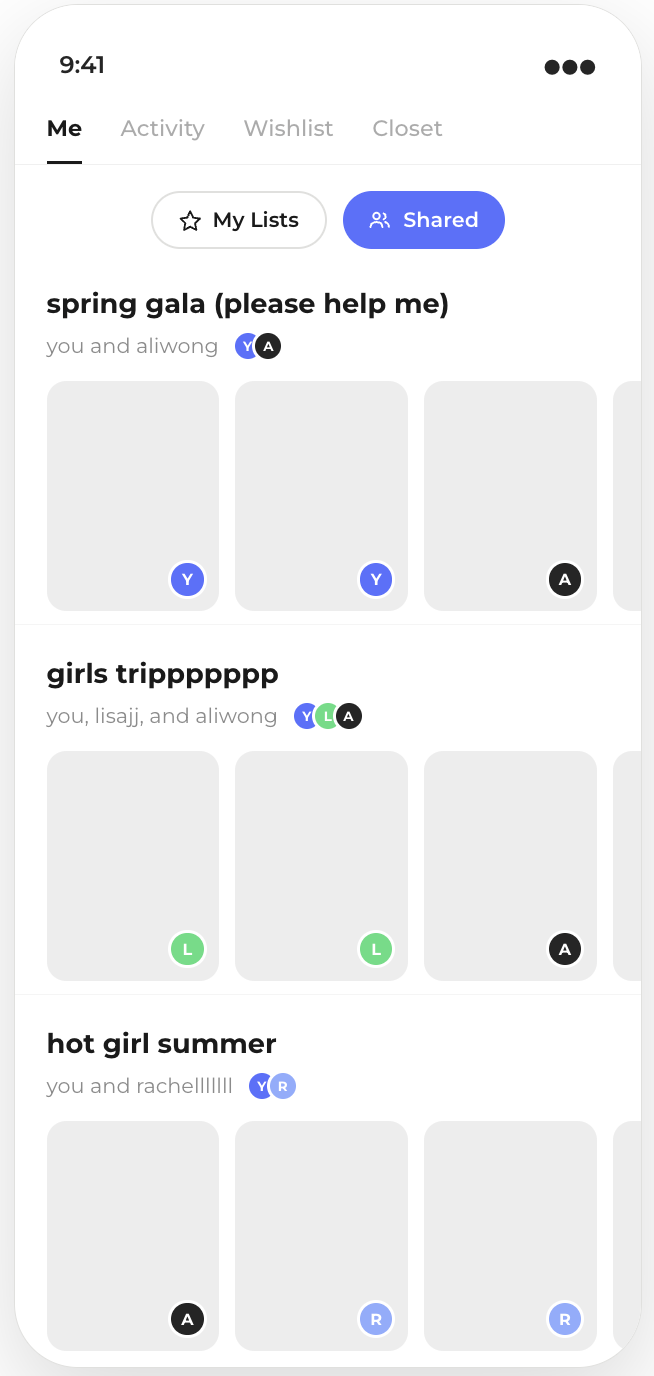
Joint wishlist view previewing several saved items
04 Wishlists and joint wishlists Each wishlist showed a single cover thumbnail, and users said it felt dated, closer to the apps they had moved on from than the ones they used currently. I redesigned the wishlist and joint wishlist views so a list previews several saved items at once instead of one image, which makes it read as a collection rather than a folder. I also made joint wishlists one of the referral unlocks, tying the feature into the growth loop among other features.

Since we only had the summer to ship a new version, I sequenced work by how many new users a surface would touch rather than how interesting it was to build.

That meant deprioritizing delight features, the ones that make the app feel distinct but do not bring new users in. I had already proposed and built several of them, including the style personalities, fun micro-interactions and a new design identity for the app, but we decided together to move them to a later cycle so we could prioritize user acquisition and activation.

Mapped and built the Shopify checkout-to-closet experience, spanning 6+ flows across new and returning user scenarios (mobile-web, in-app, desktop).
Redesigned the website's main landing page around a new product message, driven by beta feedback and the overhauled product positioning.
Ran frequent QA sessions across successive TestFlight builds, maintaining a structured feedback log that paired every bug and usability issue with a proposed fix, and escalated priorities to engineering.
Designed a feedback loop that converts negative signals into structured data, replacing silent dismissals with a reason picker that feeds the recommendation engine.
Rebuilt the user profile as a style identity page, giving each user a style archetype and the social surfaces relevant to the target user group's interests.
Came away with much sharper prototyping skills and a better sense of how the PM role is widening, from defining what should get built to using AI tools to build a working version and put the vision in front of stakeholders early.
Learned how to synthesize feedback from beta testing and QA, turning scattered individual complaints into a clear picture of what the product should be.
After a few years in large, structured companies, saw what it takes to work at an early-stage startup, where there is no internal process to inherit but the creative freedom to propose a direction and build it yourself.
Learned how to build a case strong enough to change a founder's mind about their own product, and that evidence moves people where opinions do not.

“I had the pleasure of managing Kathryn this summer as a Product Manager. Throughout her internship, Kathryn demonstrated strong product instincts, attention to detail, and an impressive ability to take ownership of projects from initial research through execution. She was thoughtful about the user experience, asked the right questions, and was able to work effectively across product, design, and engineering.

What stood out most was her willingness to jump into ambiguous problems, learn quickly, and turn feedback into action. She was dependable, proactive, and genuinely invested in making the product better. I would highly recommend Kathryn to any team looking for a skilled PM!”

Sarah Findlay, CEO and Founder, Garde-Robe Inc.

Next

Rituals Cosmetics →

Go-to-market and market expansion, taking a European beauty brand from zero to four stores across Southeast Asia in under six months.